

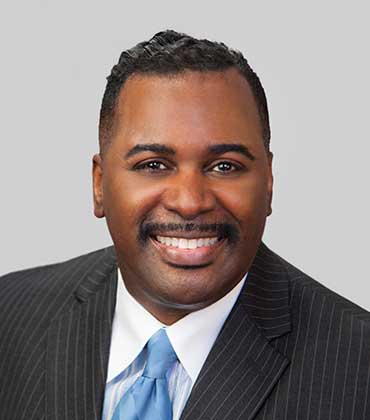
 Dr. Thomas Maridada, Founder
My professional practice has been shaped by the thought leadership of countless mentors, but five individuals have had a particularly profound influence on my work as an educational service provider.
1. Marva Collins transformed my understanding of evidence-based literacy through more than twenty years of mentorship. Her instructional model consistently produced literacy outcomes that remain extraordinary by today's national standards.
2. Dr. Lorraine Monroe demonstrated that excellence and high expectations could flourish in communities facing significant economic hardship, establishing the Frederick Douglass Academy as a nationally recognized pipeline to Ivy League universities.
3. Dr. Linda Paramore-Ford showed that sustained instructional leadership could transform both individual schools and entire districts into models of academic excellence.
4. Dr. Deborah Jewell-Sherman demonstrated that visionary leadership and coherent systems could dramatically improve outcomes for all learners while earning national and international recognition.
5. Dr. James "Torch" Lytle has influenced thousands of educational leaders through his work at the University of Pennsylvania, emphasizing large-scale organizational transformation.
Although each leader employed different strategies, they shared a common conviction – lasting improvements in student achievement emerge from organizational coherence rather than isolated initiatives. Individually and collectively, their results proved that coherence is not created by adding initiatives alone, but by aligning them around a shared purpose.
Creating Organizational Coherence
Today's school districts operate within increasingly complex environments. They must simultaneously strengthen literacy, recruit and retain exceptional educators, support student well-being, improve leadership capacity and prepare students with the knowledge and durable skills necessary to succeed in a rapidly changing world. Meeting these demands requires more than implementing additional programs; it requires developing coherent systems that align people, processes and practices around a shared purpose.
As an educational service provider, our work begins with three essential questions. First, is the organization identifying and solving problems of practice or merely glorifying them? Second, is it willing to invest in scalable capacity building that develops a culture of competence? Third, how can we work together to create the infrastructure necessary for continuous improvement and sustained student success?
Building Capacity Instead of Dependency
The distinction between identifying problems and glorifying them is significant. Effective organizations view problems of practice as opportunities for learning, innovation and continuous improvement. Less effective organizations unintentionally normalize persistent challenges by treating them as permanent conditions rather than solvable problems. We reject that mindset. Every educational challenge presents an opportunity to develop new expertise, strengthen organizational capacity and improve outcomes for students.
For this reason, our mission has never been to create dependency. Instead, our goal is to help organizations develop the internal capacity to solve increasingly complex problems long after our formal engagement has concluded. Sustainable improvement occurs when educators possess the knowledge, skills and confidence to continuously refine their own practice. Closing the expertise gap ultimately creates a culture of competence capable of sustaining organizational learning and accelerating student achievement.
Turning Strategy into Sustainable Improvement
Across every district we have served, one observation has remained remarkably consistent: schools rarely suffer from a shortage of initiatives. Rather, they struggle with fragmentation. New programs are frequently layered onto existing efforts without sufficient alignment, resulting in competing priorities, initiative fatigue and diminished impact. Organizational coherence is created not by adding more initiatives alone, but by aligning existing initiatives into an integrated system that consistently advances teaching, learning and continuous improvement.
Accordingly, our work follows three priorities. We first help organizations identify the most significant problems of practice. We then build the leadership and instructional capacity needed to solve those problems. Finally, we assist districts in designing the organizational infrastructure that enables effective practices to become embedded, scalable and sustainable across the system. We strongly believe that organizations improve in proportion to their capacity to learn together.
-
The true measure of an effective educational service provider is not how indispensable it becomes, but how effectively it builds the capacity of others to thrive without it.
Measuring Success by Lasting Impact
During the past five years, the Center for Strategic Leadership and Organizational Coherence has trained more than 50,000 teachers and school leaders, partnered with more than 25 school districts and collaborated with more than 15 university partners. More than 98 percent of our district partners have experienced double-digit gains in student achievement and have sustained or expanded those gains over time. These results occurred not because the stakeholders changed, but because how they approached their work changed. Organizations deliberately strengthened their collective expertise, aligned their systems and cultivated the mindset necessary for continuous improvement.
The future of educational service providers should not be defined by becoming indispensable consultants. Rather, it should be measured by the degree to which they make themselves progressively less necessary by empowering others. The greatest impact occurs when service providers work alongside educators to co-create solutions, transfer knowledge, strengthen leadership and build the coherent systems that enable schools to thrive long after the consulting engagement has ended. Given our stance on capacity-building, we conclude that the true measure of an effective educational service provider is not how indispensable it becomes, but how effectively it builds the capacity of others to thrive without it.