

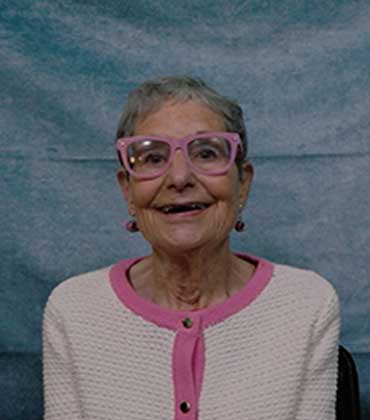
 Linda J. Jacobs, Ed.D, Executive Director
People don’t often realize that trying to learn is a risk-taking behavior. When a child tries to learn, he or she puts himself or herself out there; it’s a risk. Will the child be embarrassed in front of peers? How will the child’s self-concept hold up after frequent failures? The child will come away thinking about him/herself as a person who just can’t learn. If the child believes he or she can’t learn, why try?
Once a child is willing to risk the attempt to learn again, the obligation is on the teacher to pick a learning method with which the child will be successful. Different children learn differently. Just as we know with clothing, one size does not fit all in teaching. Competent special education teachers have multiple tools in their toolboxes and, like a good repair person, they know which tool to pick for the job at hand. The better the teacher, the more tools in the box.
Today, special education is being threatened by outside forces to try to make special education more like the general education that has already failed these children.
Political office holders are insisting on mass testing of all children in reading, mathematics and science. Children with learning issues often do not do well on these tests. When that happens, public school administrators feel pressured to improve test scores, regardless of whether or not that will improve the special education to which these children are entitled. The approach often taken to improve scores is to dictate to the classroom teacher how the children should be taught by the latest in style teaching method. Many of these children have already failed to learn through these methods and at the pace the method requires.
In a special school for children with learning challenges, children can be taught in smaller groups. Each teacher selects a method that matches how the child learns best. Teachers allow multiple ways for children to demonstrate what they have learned, not necessarily through a written test. Teachers take the time to rebuild the child’s faith in themselves. Learning begins to happen, slowly at first, then more rapidly.
-
The better the teacher, the more tools in the box.
And, almost as importantly, children are not oddballs in a special school. They are a lot like the other kids. They make friends; they get invited to birthday parties; they get invited simply to hang out with each other. And these friendships last for many years.
The Harbour School is celebrating its 45th year as a special school for kids with learning challenges. Over 800 students have graduated from The Harbour High School. Alumni have completed four-year college programs, two year post- secondary programs and a variety of vocational programs. Over 94 percent of graduates, according to an actual survey, are in post-secondary education, employed or both. Special schools provide the best special education work and make a difference.